A bare concrete garage floor in Calgary takes a beating — freeze-thaw pitting, road-salt staining, hot-tire marks and dust that never quite sweeps up. We install epoxy, polyaspartic and polyurea coatings, interlocking tiles and polished concrete built for Alberta's climate, so your floor looks like a showroom and cleans with a hose.
Most garage floor coatings fail in Calgary for one of two reasons: the concrete was never prepared properly, or the coating was applied when the slab was too cold to cure. Both are avoidable. A garage floor here has to survive a climate that swings from a −30°C cold snap to a +10°C chinook in the same week, absorb the chloride from road salt and City sand-and-brine every winter, and shrug off the hot tires of a vehicle that was just parked on Deerfoot. That is a very different job than a garage in a mild climate, and it is why we lead with prep and the right coating system for the space rather than a one-size-fits-all product.
GarageScape installs the full range — high-build epoxy, cold-cure polyaspartic and polyurea, interlocking tiles and polished concrete — across Calgary, Airdrie, Cochrane and Okotoks. Whether you want a budget-friendly finish for a double garage or a flake-broadcast showroom floor in a triple-car estate garage in Springbank Hill or Aspen Woods, we match the system to your slab, your timeline and how hard the garage actually gets used. For the deep technical background on coatings and cure temperatures, see our guide, Epoxy Garage Flooring in Calgary: Is It Worth It?
There is no single best floor — there is a best floor for how you use the space and how warm you can keep it during install. Here is how the four systems we install compare in Calgary conditions.
Our most-recommended system for Calgary. A polyurea base bonds hard, a broadcast flake hides imperfections, and a polyaspartic topcoat cures fast even in cool weather, flexes with freeze-thaw movement, and resists UV yellowing and hot-tire pickup. Often a one-day install. The premium showroom choice for estate and triple-car garages.
A high-build, high-gloss coating and the best value when you can keep the garage warm during cure (realistically late spring to early fall in an unheated space). Excellent stain and chemical resistance. We use 100%-solids and quality solvent-based epoxies rather than thin water-based box-store kits that lift under hot tires.
A no-cure, install-any-season option that floats over the slab — ideal if your concrete is rough, if you rent, or if you want to hide an aging floor without grinding. Individual tiles pop out and replace if one gets damaged, and they add a slight thermal and cushioning layer underfoot.
Grinds and densifies your existing slab into a smooth, sealed, low-maintenance surface with no added coating to peel. A durable, industrial-clean look that suits workshops and heated shop spaces on acreages, and it will not delaminate because there is nothing on top to lift.
Understanding what your floor is up against is the difference between a coating that lasts fifteen years and one that peels in two. These are the forces we prep and specify for on every Calgary job:
Engineered for Alberta
Freeze-thaw & salt readyTiming matters more here than almost anywhere. Coatings cure to slab temperature and dew point, not the air on the forecast — so we plan the install window around your garage.
The slab has thawed and warmed, humidity is manageable, and every system is on the table — including standard epoxy in unheated garages. The most popular window; book early because it fills up.
Warm slabs and long dry spells make for fast, dependable cures. Ideal for larger triple-car and shop floors, and for pairing the coating with a full garage refresh before winter gear moves back in.
The last reliable window for unheated garages. Cold-cure polyaspartic and polyurea extend it, and a chinook can open a workable day — we monitor slab temperature rather than gambling on the air forecast.
In a heated garage or shop that holds a stable temperature, polyaspartic systems install year-round. In an unheated garage during a deep freeze we hold off — cold concrete and trapped moisture cause failures, and we would rather do it right in spring.
We inspect your slab for pitting, spalling, cracks and past coatings, moisture-test where needed, and recommend the system that fits your garage, budget and timeline.
The step that decides everything. We diamond-grind the concrete to open its profile for a mechanical bond — not a quick acid etch — and neutralize any road-salt residue.
Freeze-thaw pitting, chips and hairline cracks are filled and patched with the right compounds so the finished floor is smooth and the damage does not telegraph through.
We apply the primer or base coat, broadcast decorative flake to your chosen colour, and seal it with a durable topcoat — polyaspartic for cold-cure and UV resistance, or high-build epoxy where it suits.
We confirm the cure, walk the floor with you, and give you an exact return-to-service window plus maintenance guidance so it keeps its finish for years.
High-gloss or satin, with decorative flake or quartz broadcast in the colour of your choice — the look that turns a garage into a space you show off.
Sealed against road salt, oil, brake fluid and antifreeze — spills and winter slush wipe or rinse off instead of staining bare concrete.
Flexible topcoats move with chinook swings and freeze-thaw cycles instead of cracking, and they lock moisture and salt out of the slab.
A sealed floor kills the concrete dust that coats everything and lets you clean the whole garage with a broom, a mop or a hose.
A finished garage floor reads as a maintained, premium home — a genuine selling feature in Calgary's estate and lake communities.
Many polyaspartic floors are a single-day install with vehicles back on them within a day or two — minimal disruption to a working garage.
In Calgary's estate and lake communities — the west-ridge builds of Springbank Hill and Aspen Woods, the new-build lake estates of Mahogany, the acreage shops out toward Bearspaw and Springbank — the garage is part of the home, not an afterthought. A flake-broadcast polyaspartic floor in a triple-car garage does the same thing a polished slab does for a showroom: it makes everything above it look intentional.
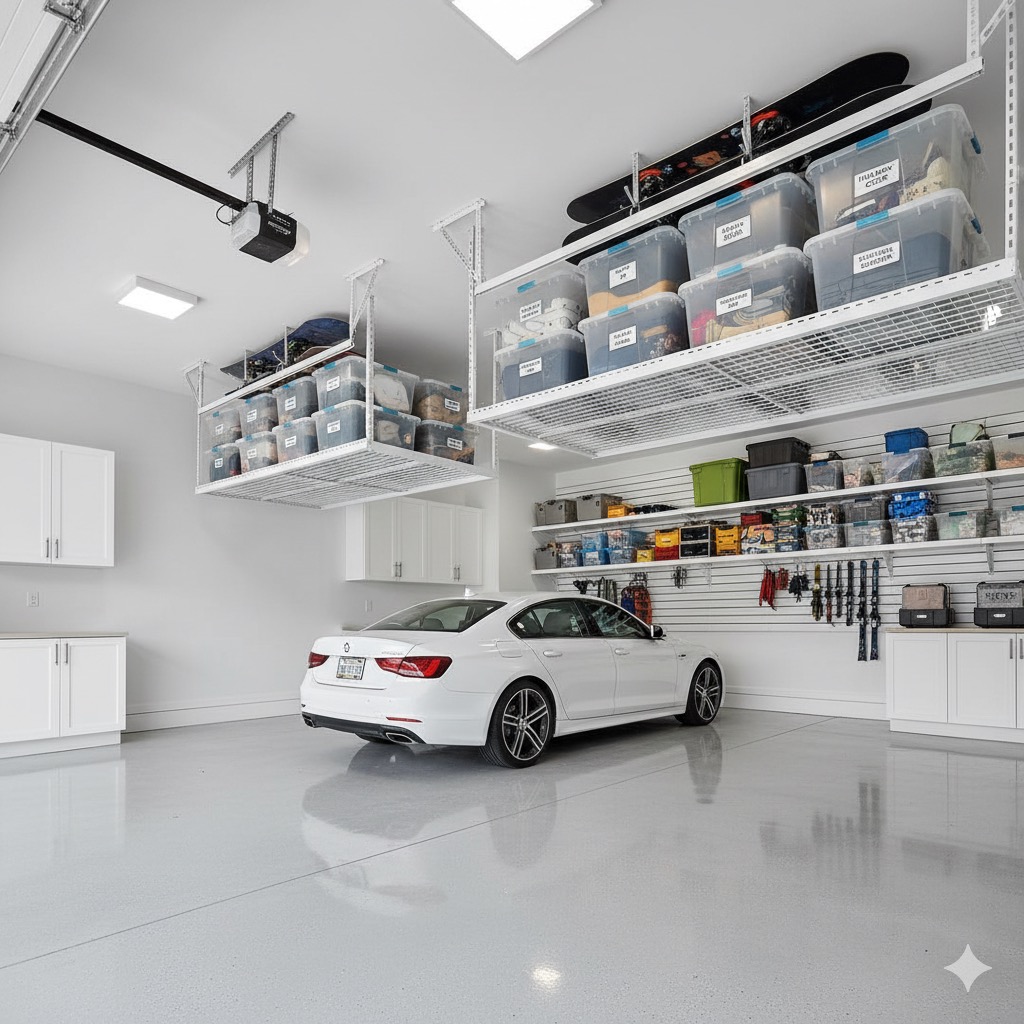
We coordinate the floor with the rest of the space so it lands as one finished room, not a patchwork. Grind and coat first, then install storage systems and cabinetry on top of a clean, sealed surface, and finish with a full garage organization plan. If the slab needs a heavy clean or de-salting before we can assess it, our garage floor cleaning service handles that step first.
Estate-Grade Finish
Triple-car & shop floorsTransparent pricing with no hidden fees. Every slab is different — its condition, size and the system you choose all matter — so these are starting points and every quote includes a free on-site assessment.
Free Consultation: All pricing includes a free, no-obligation on-site assessment of your slab, moisture and prep needs.
Epoxy is durable, but most Calgary failures come from skipping proper diamond-grinding prep or applying below the product's cure temperature. Epoxy needs a warm slab — realistically late spring to early fall in an unheated garage. For year-round installs and better freeze-thaw and UV resistance, we often recommend a polyaspartic or polyurea system that cures cold and resists hot-tire pickup.
Both work when installed right. Epoxy is the value choice for a warm-cure garage; polyaspartic and polyurea cost more but cure fast in cool weather, flex over freeze-thaw movement, resist UV yellowing, and shrug off road salt and hot tires. Many estate garages use a polyurea base, flake broadcast and polyaspartic topcoat for a showroom finish.
In a heated garage that holds a stable slab temperature, yes — polyaspartic systems are built for cool-weather cure. In an unheated garage during a deep freeze we hold off, because cold concrete and trapped moisture cause adhesion failures. A chinook can open a workable shoulder-season window; we monitor slab temperature and dew point, not just the air forecast.
Chloride from salt and brine soaks into bare concrete and undermines any coating placed over it. We deep-clean and neutralize salt residue, diamond-grind to open the profile, and repair pitting and spalling before priming, so the finished coating bonds and then keeps future salt on the surface.
Usually yes. Freeze-thaw pitting, spalling and hairline cracks are repaired as part of prep — we grind, fill and patch, then coat. Full-depth structural cracks or a slab with active moisture problems get assessed first; we would rather flag an issue than coat over it and watch the finish fail.
A standard double-garage polyaspartic floor is often a single-day install, with light foot traffic that evening and vehicles back in about 24–48 hours. High-build epoxy takes 2–4 days including cure. You get an exact return-to-service window at the quote.
With correct prep and the right system, 10 to 20 years or more. Polyaspartic and polyurea topcoats generally outlast standard epoxy in our climate; interlocking tiles can last decades and let you swap a single damaged tile. Maintenance guidance comes with every install.
Yes — we need the full floor clear. Vehicles and stored items come out for the work; we can help plan the timing and where everything goes, and pair the floor with a garage organization or storage plan so the whole space gets done at once.
Book a free on-site assessment and we'll recommend the right coating system, timing and price for your slab.