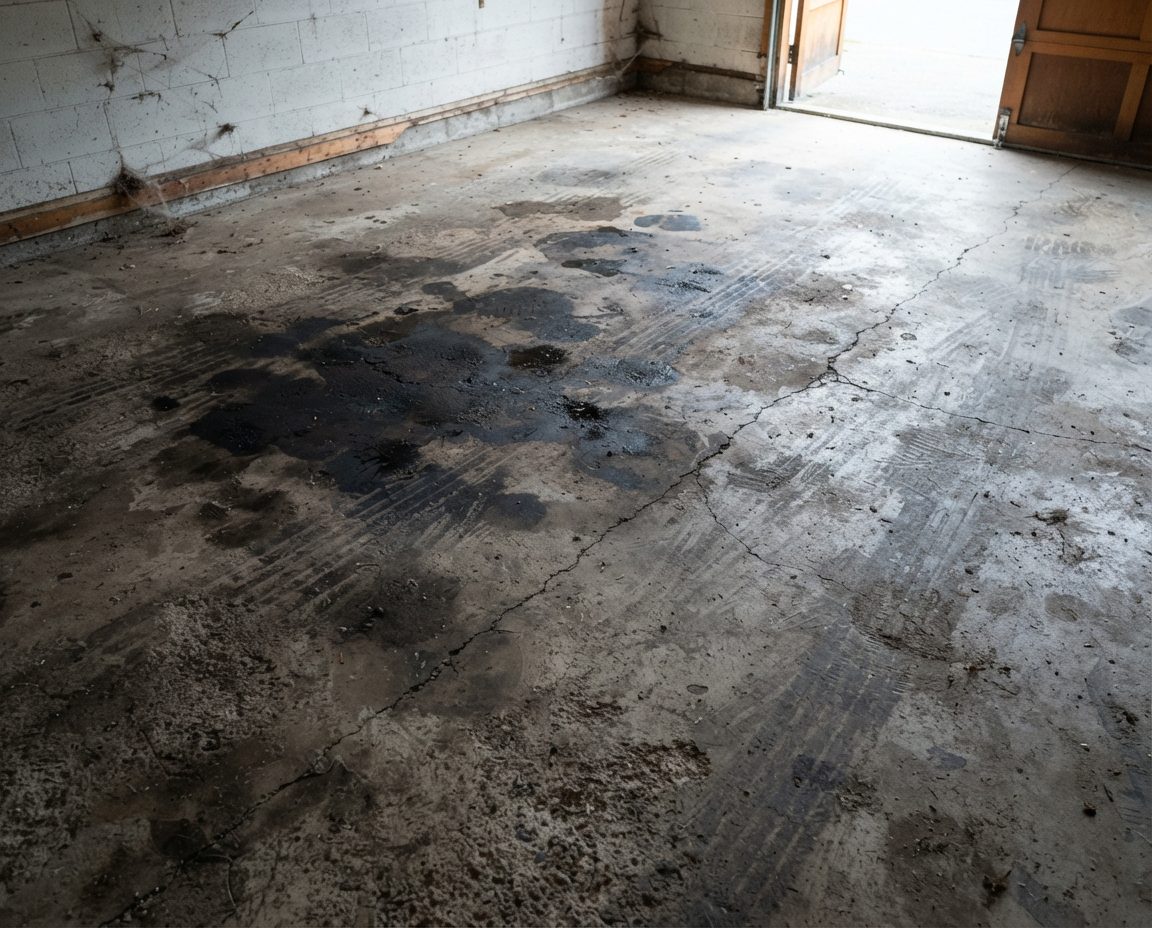
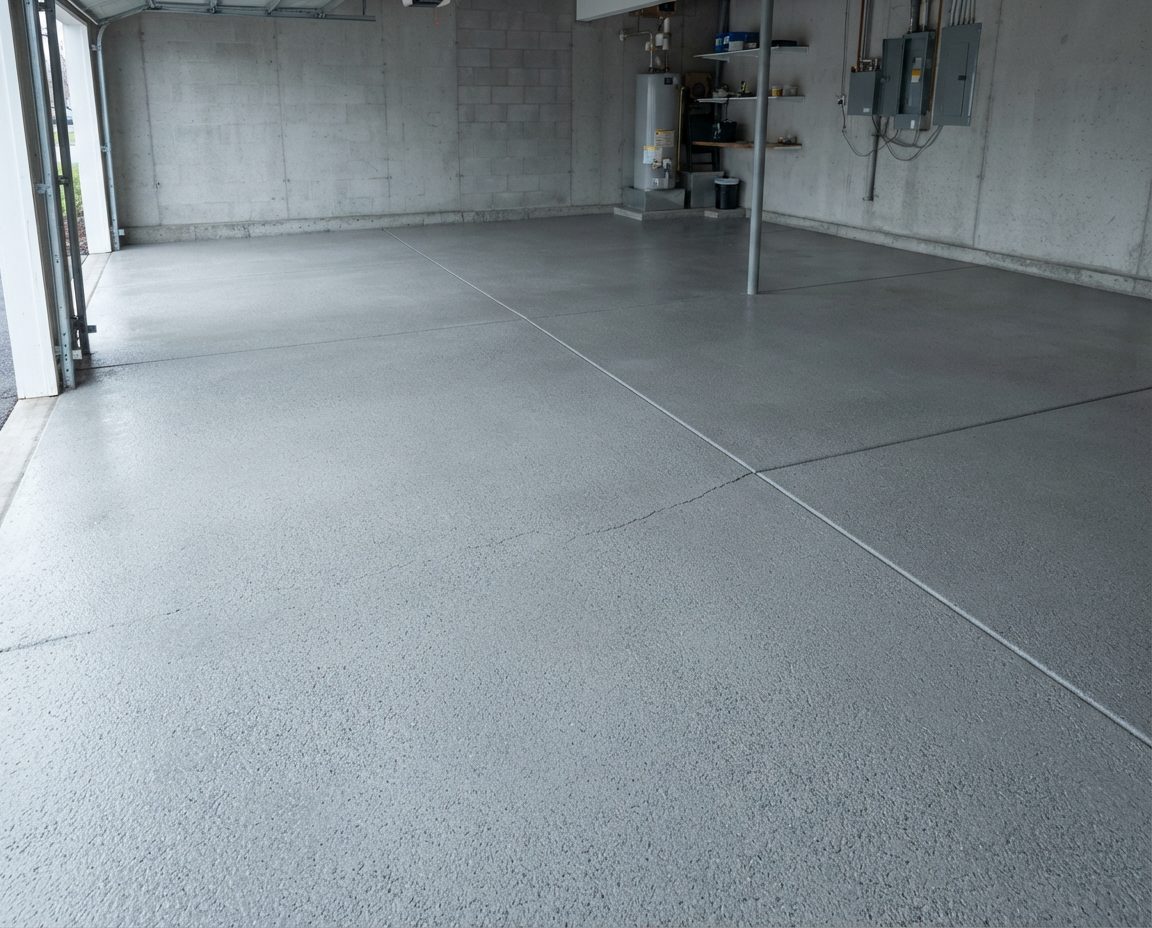
A winter's worth of salt, grit and oil — gone in an afternoonHot-water wash, commercial degreaser, poultice extraction on the set-in stains, and a chloride flush so the salt stops eating the surface.
Calgary garage floors don't die of damp — they die of freeze-thaw and road salt. Every chinook winter your slab absorbs salt-laden melt, freezes, thaws, and pops a little more of its surface off. We flush the winter off, neutralise the chloride, pull the oil stains out, and hand the floor back ready to seal.
A winter's worth of salt, grit and oil — gone in an afternoonHot-water wash, commercial degreaser, poultice extraction on the set-in stains, and a chloride flush so the salt stops eating the surface.
Most garage floor advice online is written for climates that stay frozen all winter or never freeze at all. Calgary is neither, and that's exactly the problem.
A chinook can lift the city from minus twenty to plus ten in a day. For your garage slab, every one of those swings is a damage cycle: snow and slush melt off the car, salt-laden water soaks into the pore structure of the concrete, the temperature drops again, and the water freezes and expands by roughly nine percent. Each expansion pops microscopic flakes off the surface. Do that dozens of times a winter, year after year, and you get the classic Calgary garage floor — pitted, flaking, dusty, with exposed aggregate where the surface paste used to be.
A steadily cold city gets a handful of freeze-thaw cycles a winter. Calgary gets dozens. That's why a fifteen-year-old Calgary slab often looks worse than a forty-year-old one from somewhere the temperature just goes down in November and stays there.
Salt makes freeze-thaw worse in two ways. It lowers the freezing point, so water stays liquid longer and soaks deeper into the slab before it finally freezes — deeper water means deeper damage. And the chloride itself chemically attacks the concrete surface and corrodes any rebar close to it. A salty slab doesn't just look bad; it's actively being consumed. Flushing the chloride out every spring is the single most protective thing you can do for a Calgary garage floor.
Calgary treats winter roads with a salt and gravel mix, and every drive home relocates a little of it onto your garage floor. By March the slab under a daily driver carries a visible white film, a beach of sand and gravel, and a slush line where the car drips. Three things about that load are worth knowing:
| What's on the floor | Why it's there | How we treat it |
|---|---|---|
| White salt film | Tracked-in road de-icer, dissolved into the surface | Hot-water flush and chloride neutralisation |
| Sand & gravel "beach" | Winter road grit carried in on tires and boots | Dry sweep and vacuum before any washing |
| Motor oil & transmission fluid | Daily-driver drips absorbed into porous concrete | Commercial degreaser; poultice draw-out for set-in stains |
| Spalling & pitting | Freeze-thaw cycles, accelerated by chinooks and salt | Assessed and documented; cleaning tuned so it doesn't worsen it |
| Tire rubber film | Warm-weather plasticiser transfer | Alkaline cleaner with hot-water agitation |
| Rust rings | Jack stands, shovels, metal shelving feet in the salt zone | Oxalic-based rust remover |
| Paint & drywall compound | Renovation projects staged in the garage | Mechanical removal; solvent only where the slab tolerates it |
| General grey grime | Years of dust bound with exhaust film | Surface cleaner attachment for even, stripe-free coverage |
The most common disappointment in garage floor cleaning: someone rents a pressure washer, blasts the oil stain, it looks fixed, and ten days later it's back. That's not bad luck — it's physics. Oil migrates down into the pore network of the slab, sometimes millimetres deep. Pressure cleans the top; the rest wicks back up.
The fix is a poultice — an absorbent compound mixed with solvent, spread over the stain, and left for hours. The solvent re-dissolves the oil, and as the poultice dries, capillary action reverses and pulls the oil up into the absorbent, which is then scraped off and disposed of. Honest limits: a stain that's been feeding into a porous slab for a decade may lighten 70–90% rather than vanish, and some need two cycles. We tell you which you're looking at when we quote.
Here's where Calgary differs from the coast in your favour: this is a good climate to seal a garage floor in. Dry summers, low ground moisture, slabs that dry fully — the conditions coastal installers wish they had.
A penetrating siloxane or silane sealer reduces how much salt-laden water the slab can absorb, which directly slows the freeze-thaw cycle that's eating your floor. The order matters though:
Our clean leaves the floor genuinely ready to seal. If you're considering the bigger step — epoxy or polyaspartic coating — the same rule applies with more zeros on it: coating over a salty, oily or damp slab is how a $4,000 floor fails in two winters. Clean first, test first.
Age, spalling, pitting, crack pattern, existing coatings, and how much surface paste is left. This decides pressure, nozzle and chemistry — and whether high pressure is safe on your concrete at all.
The winter's sand and gravel is swept and vacuumed off before any water touches the floor. Wet grit under a pressure washer acts like sandblasting media on your slab.
Degreaser on oil with proper dwell time, oxalic on rust, alkaline on tire film. Set-in oil stains get a poultice applied now so it draws while we do everything else.
Hot water does what cold can't on salt and grease. A rotating surface cleaner gives even coverage without wand stripes, and the full-slab flush lifts dissolved chloride out of the surface.
Salt residue neutralised, wash water extracted rather than pushed out the door — in winter, water flushed onto your driveway becomes a skating rink by evening.
Forced drying, then a short written note: slab condition, spalling extent, and whether the floor is a good sealing or coating candidate. We don't sell coatings, so the answer is just the answer.
Starting prices. Final quote on site, before any work begins — no surprises after.
Spring, right after the melt, is the highest-value window. The full winter's salt load is on the slab and removing it stops the chloride damage for the year. Late April into May books out first. Fall is second-best — going into winter with a clean, sealed floor means the season's salt sits on sealer instead of bare concrete. Summer is sealing season, when the slab is warm and bone dry. And mid-winter cleans are genuinely worth it for heavy-use attached garages, because the salt is doing its damage in January, not waiting politely for spring.
One more Calgary-specific reason to keep the floor clean enough to park on: hail season. June through September, the car that lives in the garage doesn't get the dents. A garage too full or too filthy to park in has a very measurable cost here — ask anyone who's been through a June hailstorm with the car on the driveway. If the floor isn't the only problem, our decluttering and full garage cleaning services get the whole space back.
All Calgary quadrants and surrounding communities:
A single-car floor starts at $179 and a standard double at $249. Heavy oil staining needing poultice extraction adds $60–$150, and a full salt-neutralise-and-seal-prep package for a double runs $349–$449. We quote on the actual floor, not over the phone.
Tracked-in road de-icer. Calgary salts and gravels winter roads, your tires carry it in, the slush melts, and evaporation leaves chloride salts as a white film. It isn't cosmetic — chloride accelerates surface deterioration and corrodes anything metal near it. It has to be flushed and neutralised; sweeping just moves it around.
Freeze-thaw spalling, accelerated by chinooks. Water in the slab's pores freezes, expands about nine percent, and pops flakes off the surface. Calgary's chinook cycles run that process dozens of times a winter — far more than steadily cold cities — and salt lets the water soak deeper before freezing. Cleaning removes the salt that feeds the cycle; sealing slows it down.
Usually. Not with pressure alone — oil sits deep in the pores and wicks back — but a poultice that re-dissolves the oil and draws it up out of the concrete as it dries genuinely removes it. Decade-old stains on porous slabs may lighten 70–90% rather than vanish, and we tell you which outcome you're looking at before you pay.
In Calgary, usually yes — this is a much better sealing climate than the coast. A penetrating sealer reduces how much salt-laden water the slab absorbs, which directly slows freeze-thaw damage. Order matters: clean, neutralise, dry fully, then seal. Sealing over salt locks the problem in.
Yes, for attached and heated garages — most of Calgary. A January clean is worthwhile when salt build-up is heavy, because the chloride damages the slab all winter. Unheated detached garages get scheduled around cold snaps; washing concrete at minus twenty makes an ice rink, not a clean floor.
Free on-site quote and slab assessment. Fixed price before we start, and a written report on whether your floor is ready to seal.
Serving Calgary, Airdrie, Okotoks, Cochrane and Chestermere.