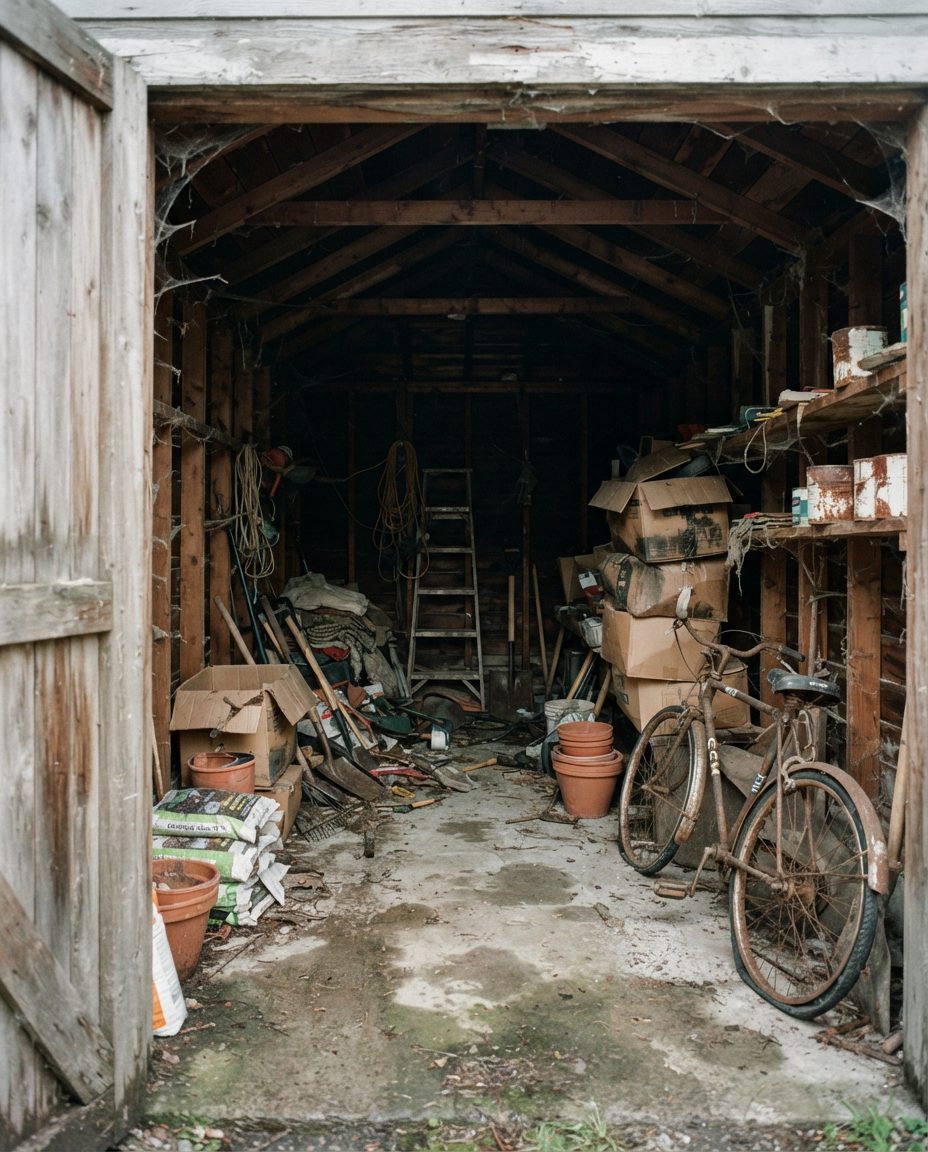
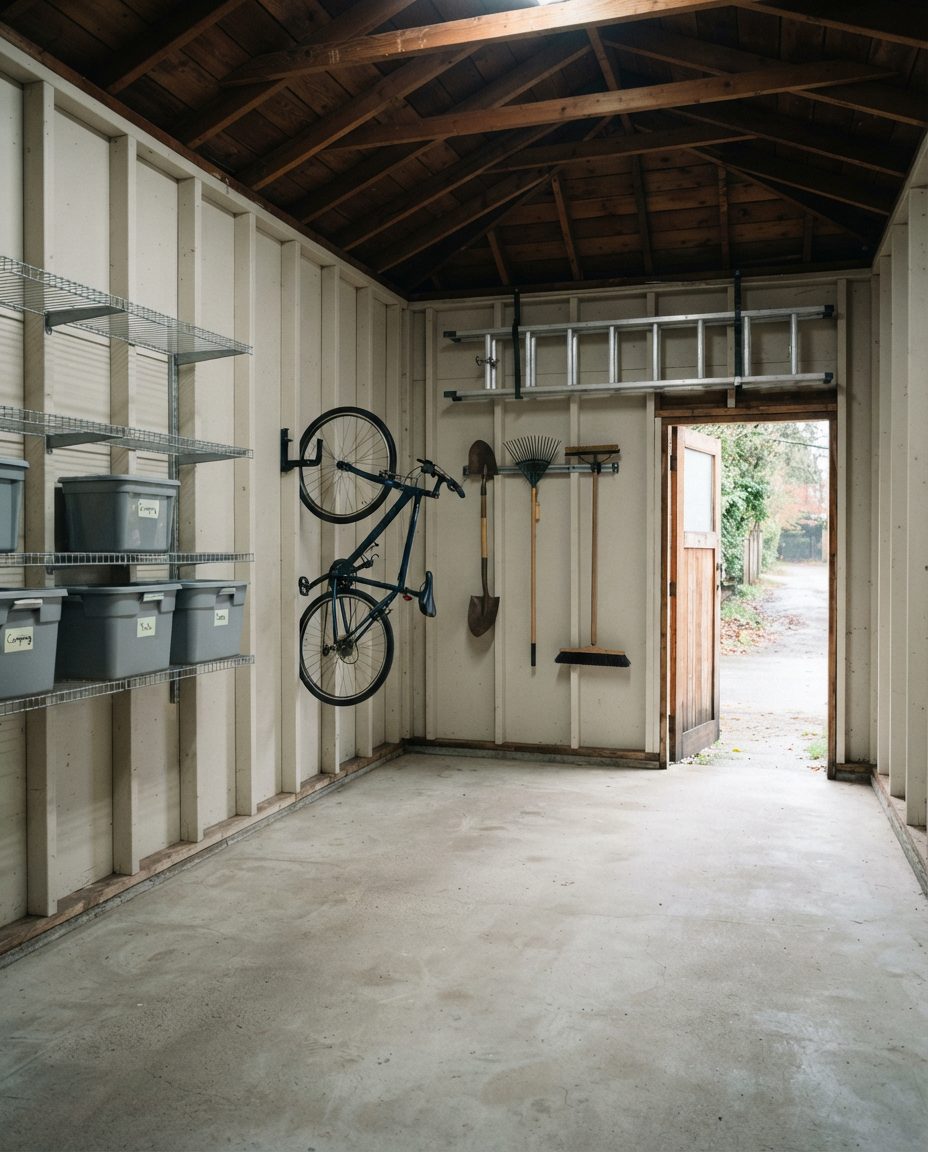
North Shore garage — cleared, treated, driedMoss and organic debris removed, the damp wall treated, everything porous lifted off the slab and sealed. The bike is on the wall because a North Shore floor will eat a drivetrain.
The North Shore takes substantially more rain than the rest of Metro Vancouver — air forced upward against the mountains drops its moisture here first. Add dense conifer canopy that never lets a wall dry out and slopes that put most garages under the house, and you get the wettest, mossiest garages we work on anywhere. Plus more mountain bikes per garage than any city in Canada.
North Shore garage — cleared, treated, driedMoss and organic debris removed, the damp wall treated, everything porous lifted off the slab and sealed. The bike is on the wall because a North Shore floor will eat a drivetrain.
Three things stack up here, and together they make North Vancouver a genuinely different job from a garage ten minutes south across the bridge.
Orographic rainfall. Moist Pacific air moving inland is forced upward by the North Shore mountains, cools, and drops its moisture on the way. The result is that the upper slopes of North Vancouver receive markedly more precipitation than downtown Vancouver does — and the higher up you live, the bigger the gap.
Dense conifer canopy. The tree cover that makes the North Shore beautiful also keeps garage walls and aprons permanently shaded, holds moisture against structures, and drops needles and organic debris year-round. A north-facing wall under mature cedar effectively never dries out.
Slope. North Vancouver is built on a hillside, so under-house and tuck-under garages are the norm rather than the exception. That has two consequences: the garage shares air with the living space above it, and the uphill wall is holding back a saturated slope.
This is the single most common structural issue we find in North Vancouver. A tuck-under garage cut into a slope has one wall with wet ground behind it and, frequently, drainage that was adequate in 1975 and isn't now. Water enters at the wall-slab junction, and because that wall is usually the darkest and least visited part of the garage, the mould gets well established before anyone notices. We locate it, treat it, and tell you plainly what the drainage would need — whether or not that's work we do.
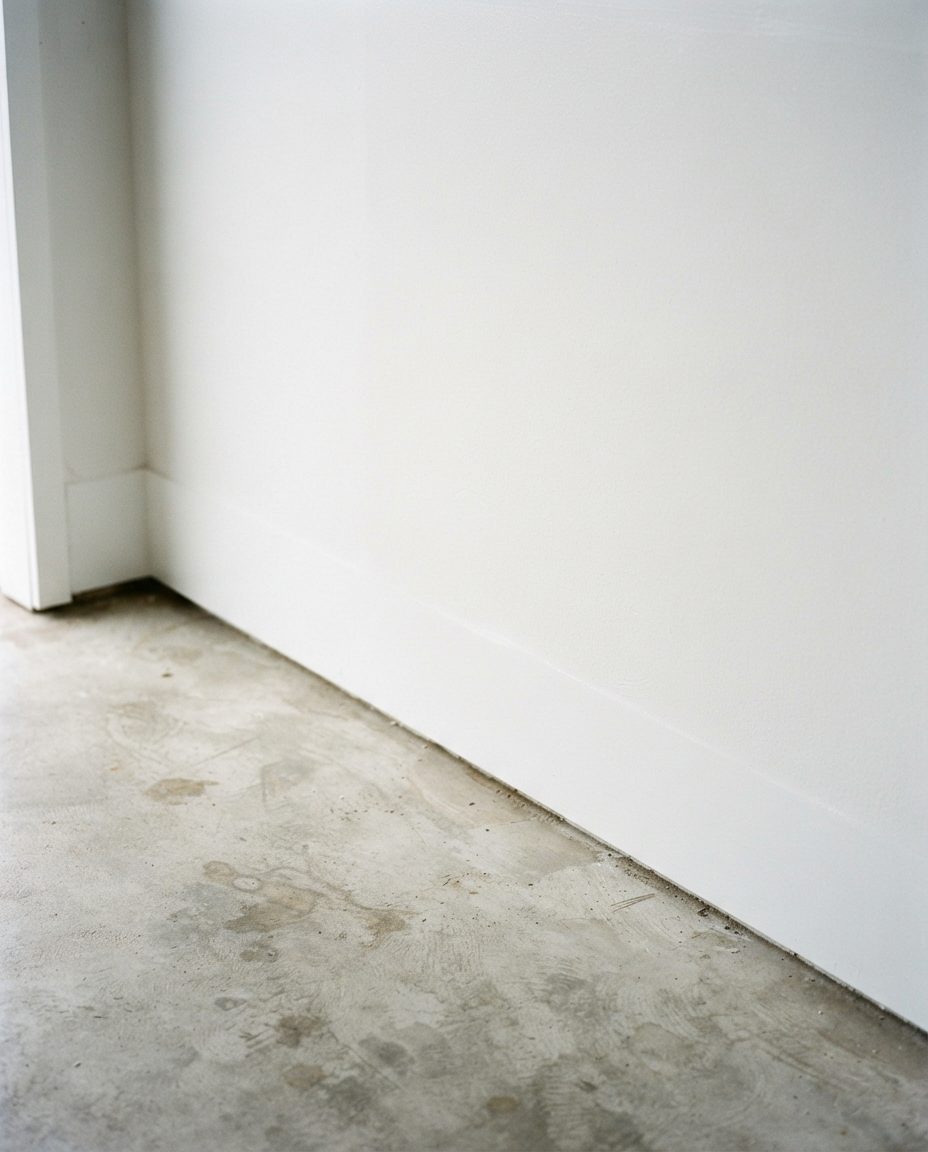
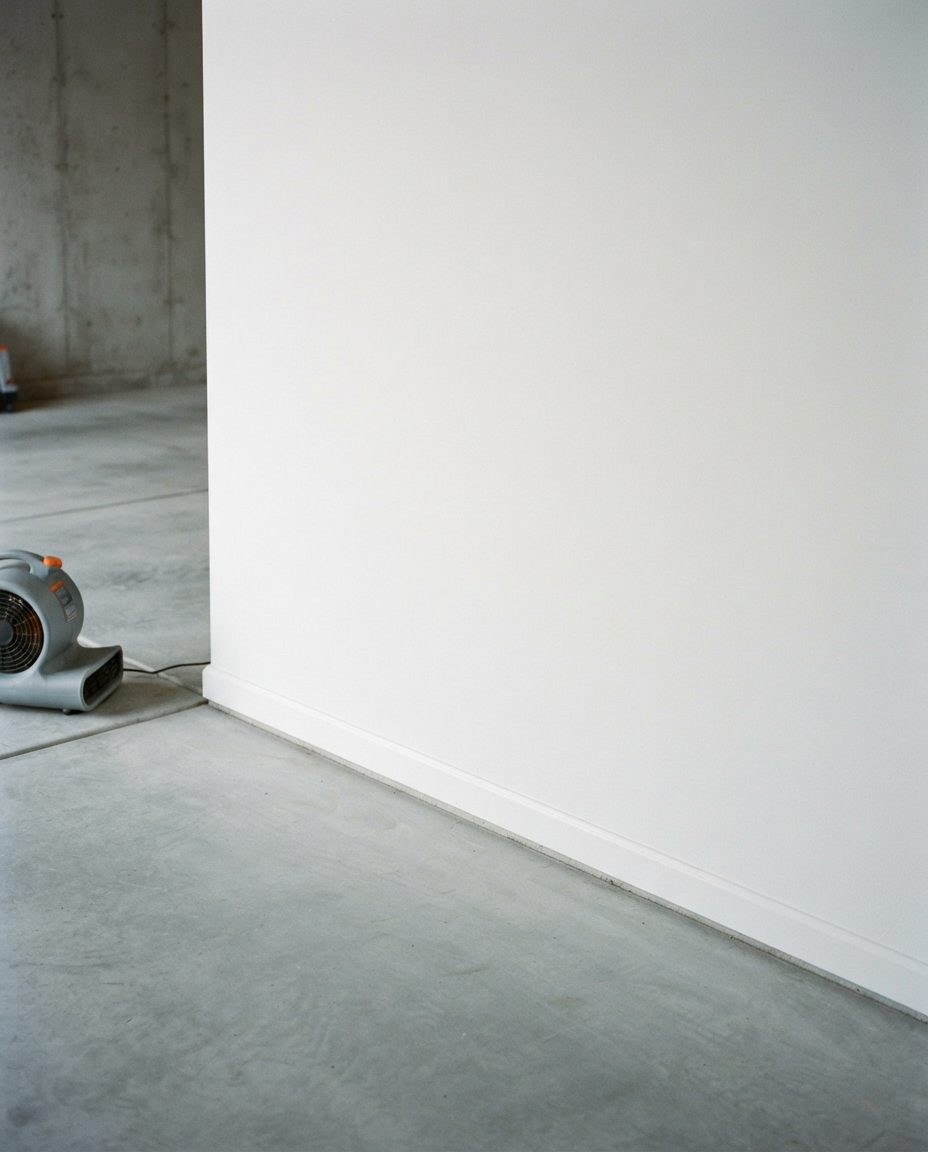
Start at the wall-slab jointAn example of the cleanup. On a tuck-under garage the staining starts where the uphill wall meets the floor, so that joint is cleaned, treated and dried first, and storage stays a hand-width off the wall afterwards.
Moss and green algae along the bottom of the garage door, in the door track and across the apron are close to inevitable on the North Shore. Beyond looking neglected, moss holds water directly against the structure. On a wooden garage door that rots the bottom rail; on the apron it keeps the slab edge permanently saturated. We remove it and treat the surface so it doesn't re-establish over a single wet season.
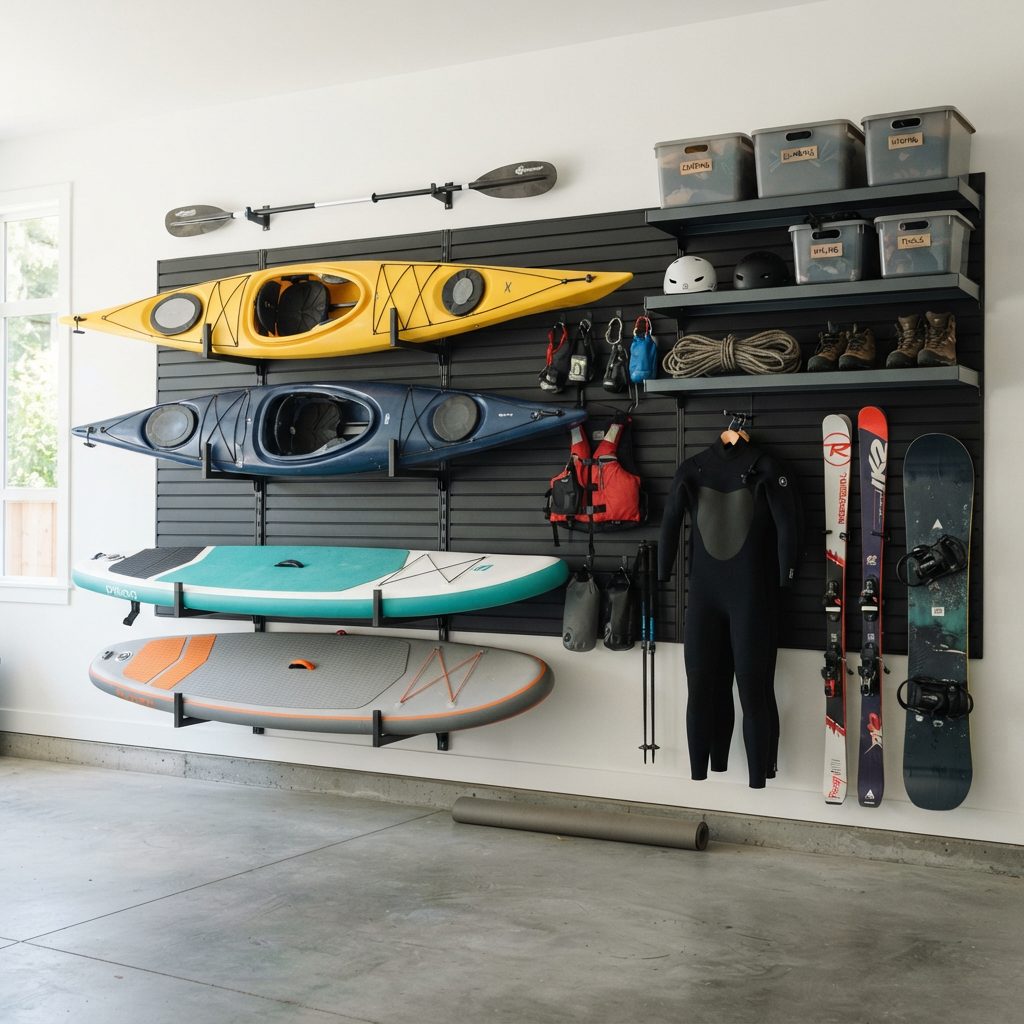
North Vancouver garages carry more outdoor equipment than anywhere else we work. Fromme and Seymour are minutes away, Grouse is up the road, Deep Cove is a paddling hub. A single Lynn Valley or Blueridge garage routinely holds four or five mountain bikes plus a spare frame, full ski and snowboard kit for the family, paddleboards, a kayak, wetsuits and both car-camping and backcountry gear. Storage design that ignores that fails within a month, and a bike parked on a damp North Shore slab corrodes its drivetrain from below.
A mountain bike drivetrain is expensive, and a damp concrete slab corrodes chain, cassette and bottom bracket from underneath. On the North Shore we treat floor bike storage as a non-starter — daily riders go on vertical wall hooks at accessible height, seasonal bikes on ceiling hoists. Security is a live consideration too: Vancouver has the highest bike theft rate per capita of any major Canadian city, so we keep racks out of sightlines from windows and open doors. Our garage bike storage page covers hooks, rails, e-bike charging and theft prevention in detail.
The default across most of North Vancouver. Cut into the slope, one wall holding back wet ground, shared air with the living space above. Sanitisation matters more here because garage air isn't isolated, and the uphill wall is where we look first.
Lower Lonsdale, Grand Boulevard, Central Lonsdale and the older parts of Lynn Valley. Frequently pre-war, unheated, no power or water, and the worst moss exposure in the region.
Tight lots, steep access, heavy paddle and water-sports gear loads. Wetsuits, boards and kayaks that come home wet, which in this climate becomes a mould source within days if they go straight into a closed garage.
Larger attached double garages, high gear volume, better construction. These are usually organisation jobs rather than remediation — the problem is capacity and layout, not damage.
| Problem | Why it happens here | What it needs |
|---|---|---|
| Heavy moss on apron and door line | Highest regional rainfall plus dense conifer shade | Removal plus residual treatment; flag any rotted door bottom rail |
| Water entry at the uphill wall | Tuck-under garage cut into a saturated slope, dated drainage | Located and documented; treated, with drainage requirements written up |
| Mould on the darkest wall | North-facing, shaded, never dries, contents stacked flat against it | Substrate-matched treatment, porous material removed, forced dry-down |
| Corroded bike drivetrains | Bikes stored on a permanently damp slab | Everything onto wall hooks and ceiling hoists, off the concrete |
| Perished wetsuits and neoprene | Wet gear returned to a closed unheated garage | Hung storage, never folded, never on the floor |
| Gear overflow | Exceptional equipment density — bikes, skis, boards, camping | Seven-zone layout with dedicated gear walls and overhead racking |
| Needle and organic debris build-up | Year-round conifer drop | Cleared at source; gutters and door track flagged if contributing |
| Musty smell reaching the house | Under-house garage sharing air with living space | Source located and treated, then full sanitisation and dry-down |
The North Shore Transfer Station on Riverside Drive in North Vancouver is the closest facility for most jobs here, which keeps disposal runs short and drive time off your invoice. Larger or non-divertible loads go to the Vancouver Landfill in Delta, which is a genuinely long round trip from the North Shore — a real cost we're transparent about rather than burying in the price.
That distance is exactly why sorting properly matters more here than almost anywhere. Every item routed to free stewardship disposal, reuse or donation is one that doesn't ride to Delta. Paint, motor oil, antifreeze, electronics, batteries and tyres are all accepted free at designated BC stewardship depots, and bikes — of which North Vancouver garages have plenty — have strong local reuse channels.
Confirm current facility hours and rates before hauling your own load. Full 2026 Metro Vancouver fee detail is on our garage cleanout page.
Yes, and by a wide margin on the upper slopes. Moist Pacific air is forced upward by the North Shore mountains, cools and drops its moisture — orographic lift. The higher up you live, the bigger the difference. Combined with dense conifer canopy that keeps walls permanently shaded, it makes North Shore garages the wettest we work on anywhere in Metro Vancouver.
If you have a tuck-under or under-house garage, it's almost certainly the uphill wall. That wall has wet ground behind it and drainage that may have been adequate decades ago and isn't now. Water enters at the wall-slab junction, and because it's usually the darkest and least visited part of the garage, growth gets well established before anyone notices. We locate it, treat it, and write up what the drainage would actually need.
Removal plus a residual treatment so it doesn't re-establish over one wet season. Moss matters more than it looks: it holds water directly against the structure, which rots the bottom rail of a wooden garage door and keeps the slab edge permanently saturated. If the door bottom has already gone soft we'll tell you, because cleaning it won't fix that.
That's half of what we do in North Vancouver. A Lynn Valley or Blueridge garage routinely holds four or five bikes, full family ski and snowboard kit, paddleboards, a kayak, wetsuits and camping gear for two different kinds of trip. We use vertical wall hooks for daily riders, ceiling hoists for seasonal bikes, wall racks for boards and skis, and hung storage for wetsuits — nothing folded and nothing on the concrete.
A single-car garage clean starts at $249 and a standard double at $349. Heavy moss and mould treatment typically adds $80 to $200, which is more common here than elsewhere. Full declutter and organise runs $749 to $1,100; cleanouts start at $399 plus disposal at cost. We're transparent that the run to the Vancouver Landfill in Delta is long from the North Shore, which is exactly why we sort hard before hauling.
Yes — Lynn Valley, Deep Cove, Lower and Central Lonsdale, Edgemont, Blueridge, Seymour, Grand Boulevard, Capilano, Dollarton and everywhere between, in both the City and the District. We also serve West Vancouver, so if you're near the boundary just ask.
Free on-site quote. Fixed price before we start. Disposal charged at cost with receipts.
Serving Lynn Valley, Deep Cove, Lonsdale, Edgemont, Blueridge, Seymour, Grand Boulevard and Capilano.