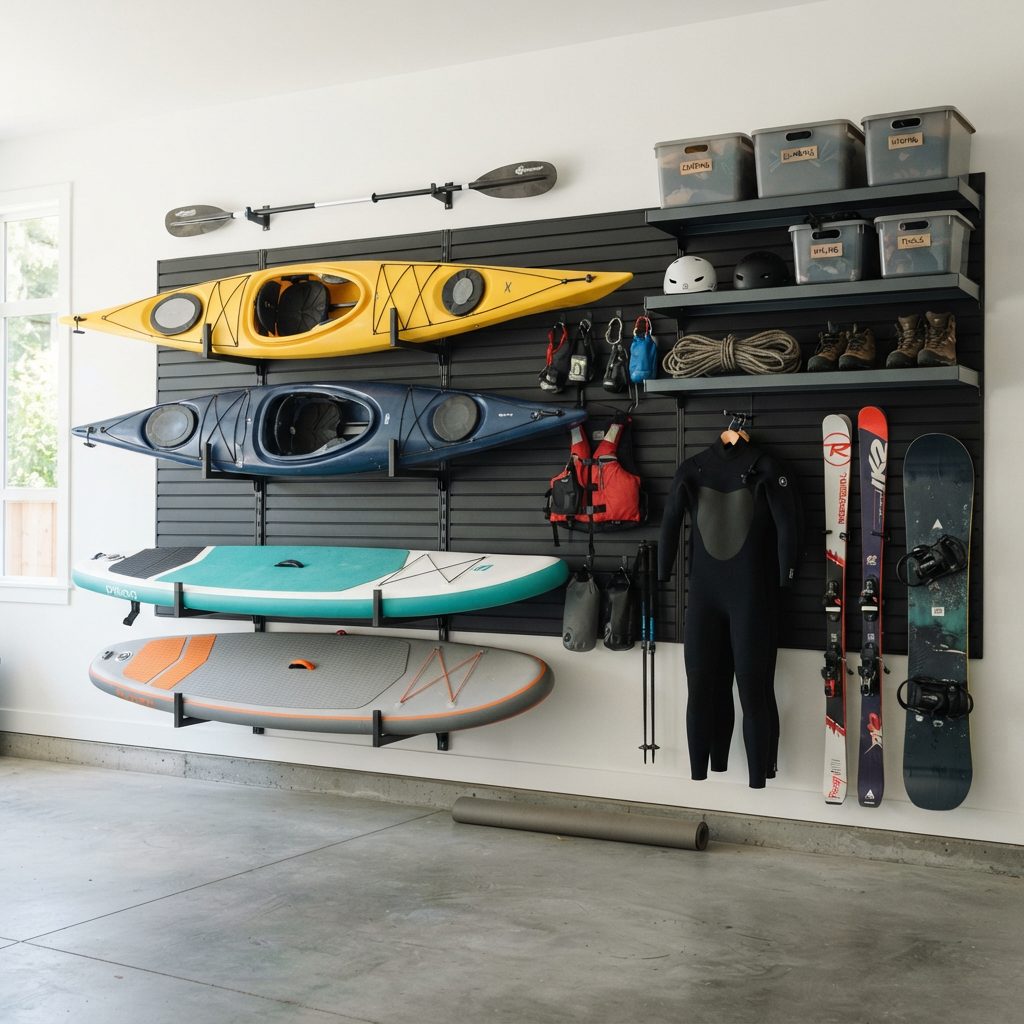
A West Vancouver garage is usually bigger than the average Metro Vancouver one, often dug into a slope, and full of gear for three seasons of mountain and water. We organize these garages so every bay has one job, the ski, bike and paddle gear hangs dry and off the floor, the carts have a wildlife-secure spot inside the door, and nothing you care about sits in cardboard on a damp slab.
Most of West Vancouver climbs. British Pacific Properties has been building on the slopes of Cypress Mountain since the 1930s, and the British Properties, Chartwell, Cypress Park and Westmount sit above the Upper Levels Highway with views over the water. Below the highway are the village streets of Ambleside and Dundarave, and to the west the waterfront neighbourhoods of Caulfeild and Eagle Harbour, then Horseshoe Bay at the ferry terminal. The housing runs from West Coast Modernist homes on the hillside to waterfront estates.
That terrain shapes the garage. Houses on a slope tend to put the garage at street level and the living space above or below it, so the garage is often cool, partly underground and the main way into the house. Bigger homes add a third or fourth bay. And because the mountain and the water are both a few minutes away, the garage stores more gear per person than almost anywhere else in the region.
This page covers how we organize those garages: the layout, the storage hardware and the habits that keep it working. If your garage first needs a deep clean, an estate clearance or a pre-listing cleanout, our garage cleaning in West Vancouver page covers that work, and the two are often booked back to back.
A three or four bay garage fails in a predictable way. Everything spreads evenly across every bay, nothing has a home, and the cars end up on the driveway in the rain. The fix is to give each bay a single job and store only that job's things in it. A split we often land on:
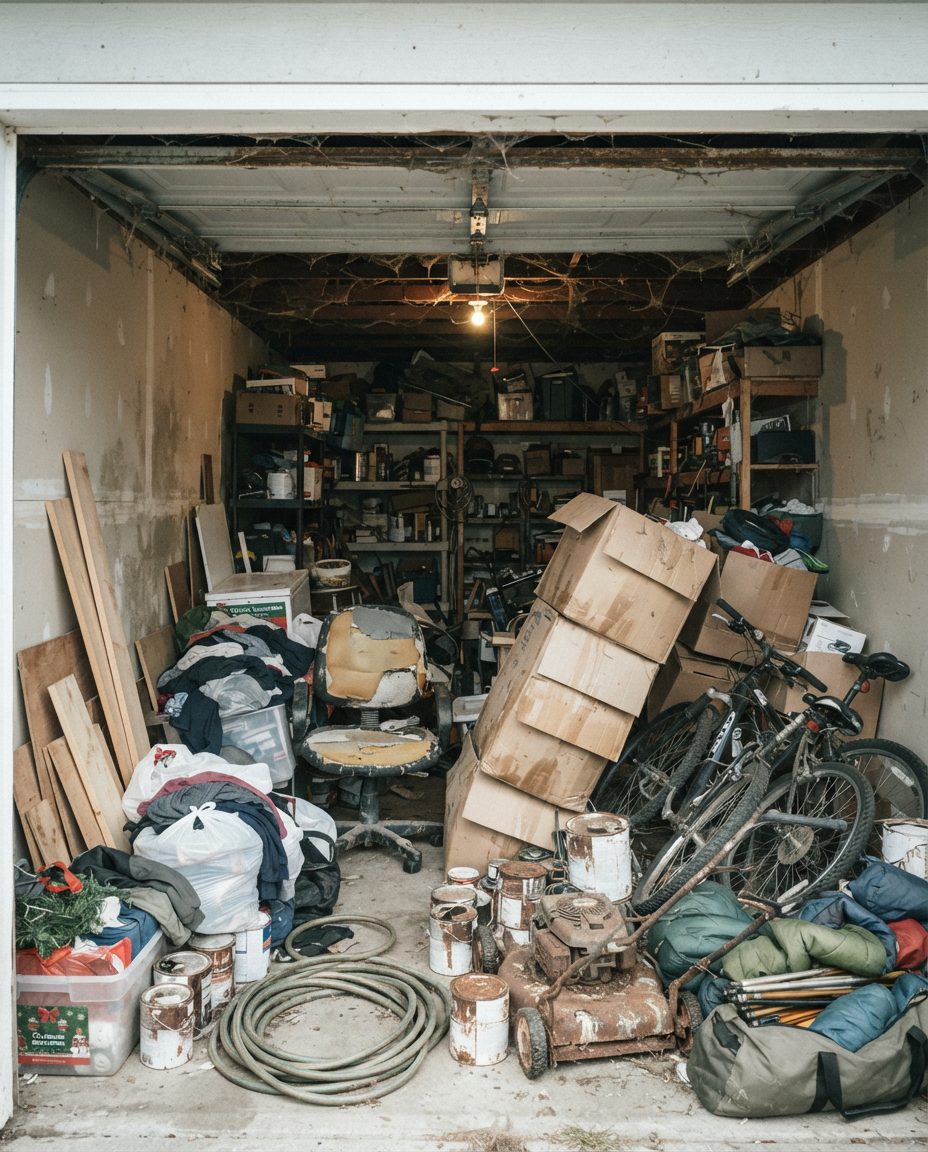
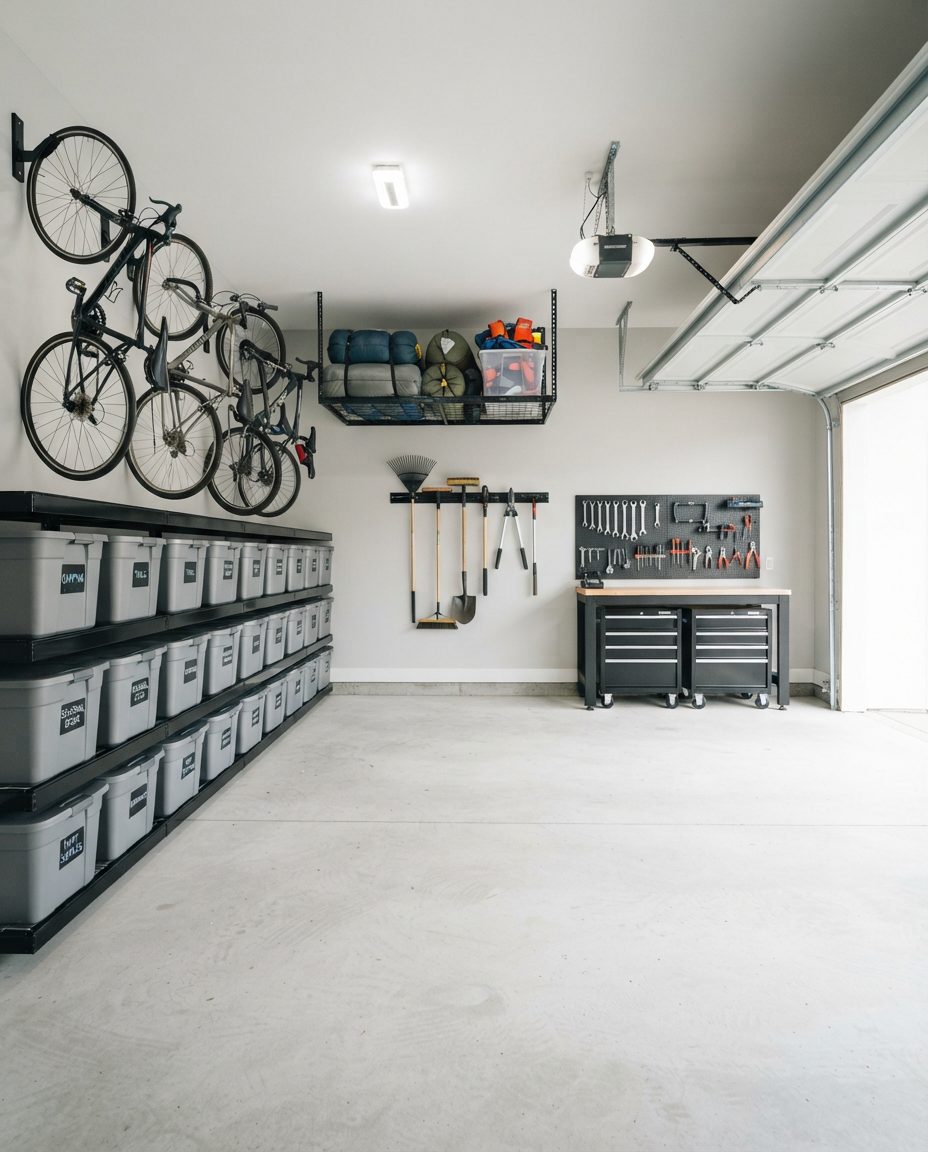
Two bays back to cars, one wall of storageAn example layout, not a photo of a West Vancouver client's garage. In a three-bay garage the same approach frees the far bay for a workshop or a boat.
Labels carry the system. Each bin is labelled with its contents and its bay, and we leave a one-page zone map taped inside a cabinet door. When a contractor, house sitter or property manager is in the house, they can put things back without asking. Large houses also collect duplicates: three ladders, two pressure washers, a stack of coolers. Spares go out with us for donation on the day, which is often what frees the third bay. When the whole garage needs a heavier cut first, our garage decluttering service runs ahead of the build.
Garages built into the hill under the house bring their own constraints. The back wall is often a concrete retaining wall against wet ground. Ceiling height can be lower than in a detached garage, with ducts, pipes and beams in the way. The door into the house may be at the top of a short stair rather than flush with the floor. And on a steep driveway, rain runs toward the overhead door.
So we plan these garages from the ceiling and the walls inward. Overhead racks go only where we have measured clearance from the door track, the opener and the roof of the tallest vehicle. Shelving goes on the dry side walls first, and on a retaining wall only with a gap behind it. The first metre inside the overhead door stays clear so wet tires and runoff never reach stored items, and the landing zone sits at the foot of the stairs to the house, where shoes and bags get dropped.
Cypress Mountain sits above the British Properties with skiing in winter. The Baden-Powell Trail crosses the slopes for hikers and runners, and the marinas and beaches from Ambleside to Horseshoe Bay bring out paddleboards, kayaks and boats in summer. A family garage can easily hold four sets of skis or boards, four bikes, two paddleboards and a kayak, plus the boots, helmets, wet suits and life jackets that go with them.
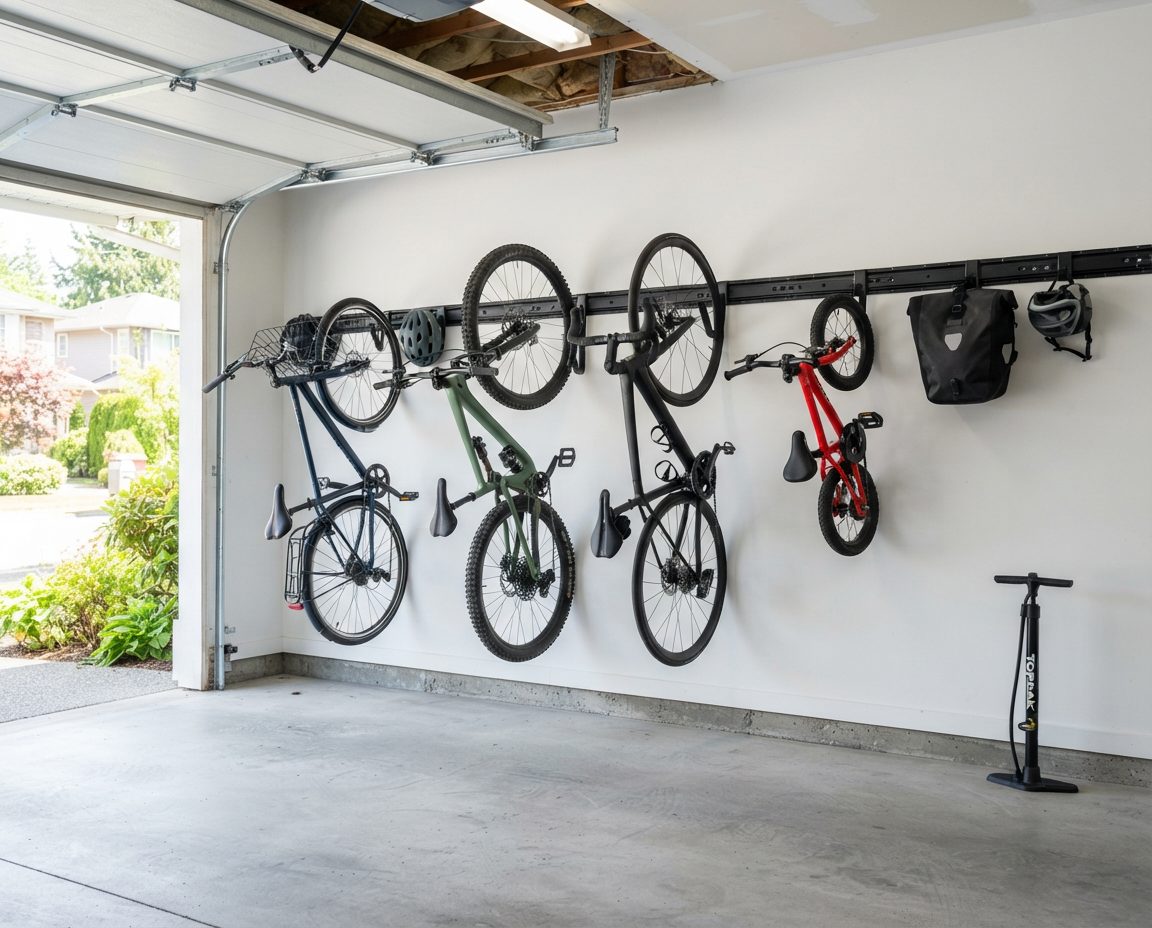
We build that gear onto one wall, close to the door it leaves by. Skis and boards stand in a wall rack with boots, gloves and helmets on an open shelf beside them so they dry between days on the hill. Bikes hang from a rail by the front wheel, with a pump and a small tool bin at the end. Wet suits and life jackets hang on open hooks rather than in a closed bin. Paddleboards and kayaks go on padded wall cradles or a ceiling hoist above the hood of a parked car, and we check that the overhead door clears them fully open. Our garage bike storage guide goes deeper on wall rails, e-bike charging and theft hardening, and the North Vancouver garage organization page covers gear walls next door on the North Shore.
Black bears come down into West Vancouver neighbourhoods, and the District's guidance puts the garage at the centre of keeping them away. It asks residents to keep garbage and the Green Can in a garage, basement or other wildlife-secure location during the week, set them out after 5 a.m. on collection day rather than the night before, and bring them back in by 9 p.m. It also suggests freezing meat, fish, bones and plate scrapings until the morning of pickup, removing outdoor freezers, feeding pets inside, and taking down bird feeders or making them unreachable. The District's bylaws require wildlife attractants to be managed responsibly.
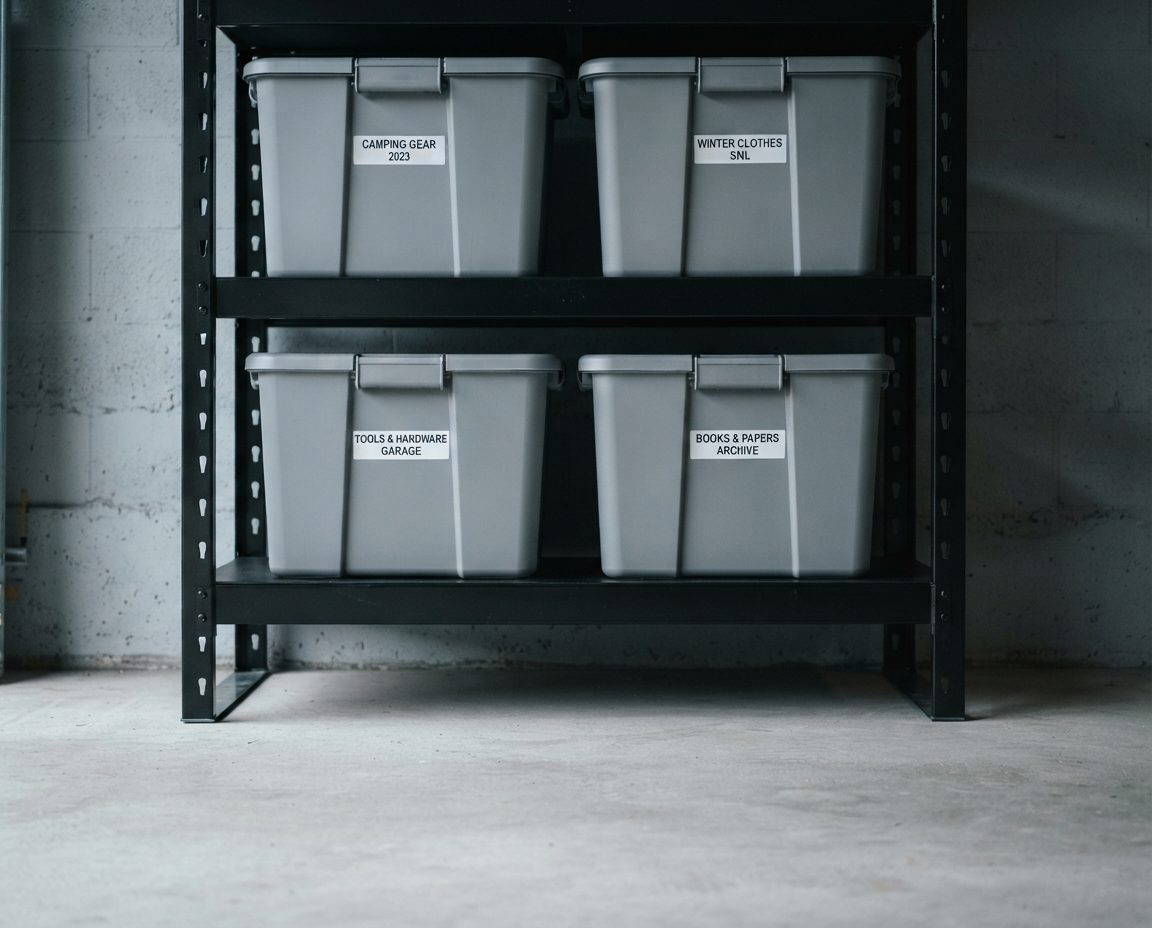
Nearly every item on that list ends up in the garage, so we give it a proper station:
Then the door stays shut. An overhead door left open on a summer evening undoes the rest.
The North Shore mountains catch more rain than the rest of the region. During one fall storm the North Shore News reported 110 millimetres at a weather station partway up Cypress Bowl Road, the most of any spot in Metro Vancouver that week and about double the total at Vancouver International Airport. Higher homes and garages set into the hillside live with that moisture for months.
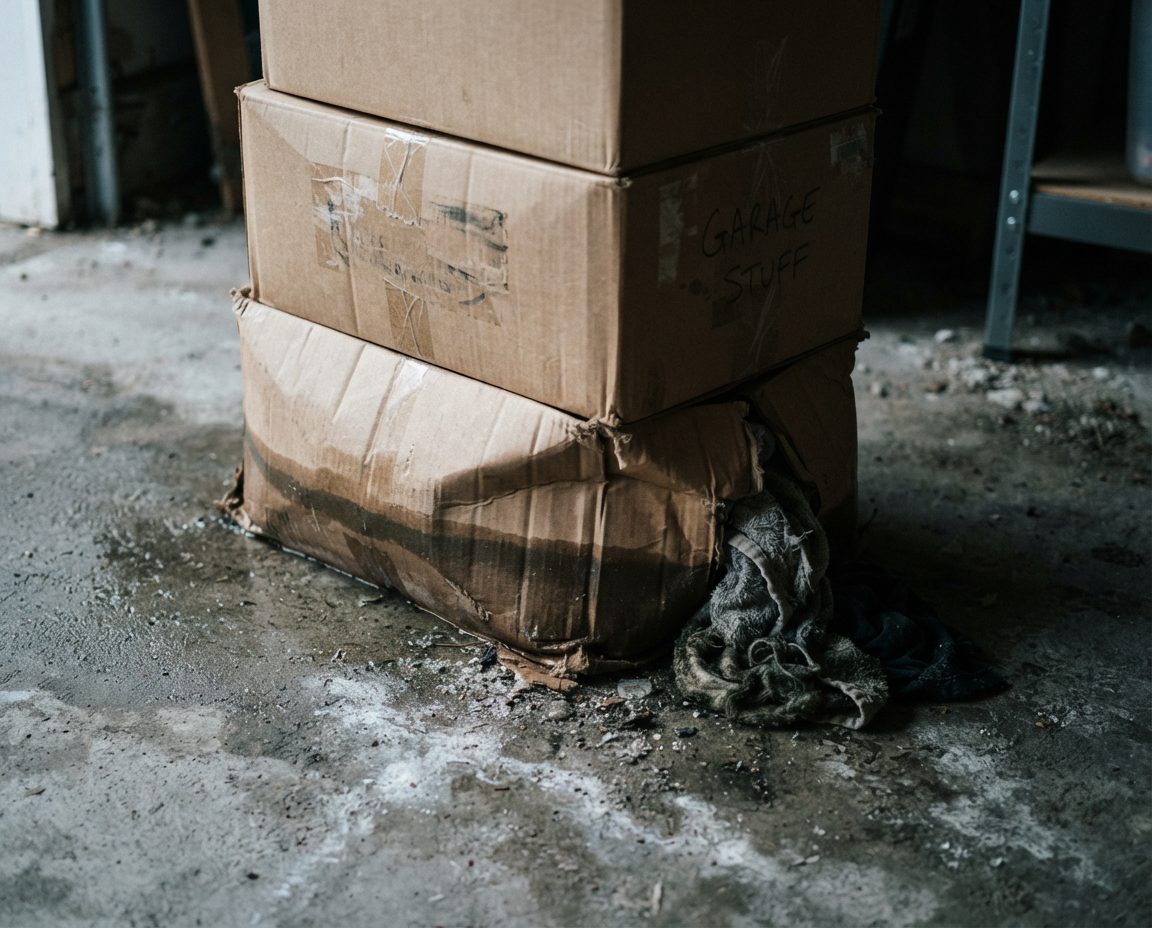
Cardboard is the first thing to go. It absorbs moisture from the air and the slab, softens, and starts to smell. Our standard fixes: everything moves into lidded plastic bins; shelving starts a few centimetres off the floor; units stand slightly away from exterior and retaining walls so air moves behind them; tools that rust hang on a wall instead of sitting in a box; and paper records, photos and textiles go into the house rather than the garage. If walls or the slab already show mould or white mineral bloom, our guide to mould in Vancouver garages explains what to clean, what to leave to a professional, and why.
The District has moved to make home charging standard: the North Shore News reported council approving a requirement that new single-family and duplex homes include an EV charging space, and that every stall in new multi-family buildings be wired for Level 2 charging. A charger only helps if the car can reach it. We keep a clear path from the charger to the car's port, mount the cable hook beside the unit, and keep shelving and bins out of the swing of the car doors. Our EV charger garage organization guide covers charger placement and cable routing in detail.
Not every West Vancouver garage is a three-bay. Older homes on the flatter streets of Ambleside and Dundarave often have a narrow single garage or carport, and townhouses near the villages have long tandem garages. In those, depth and the side walls do the work: shallow shelving down one wall, bikes hung flat against the other, and overhead racks for anything used once a year.
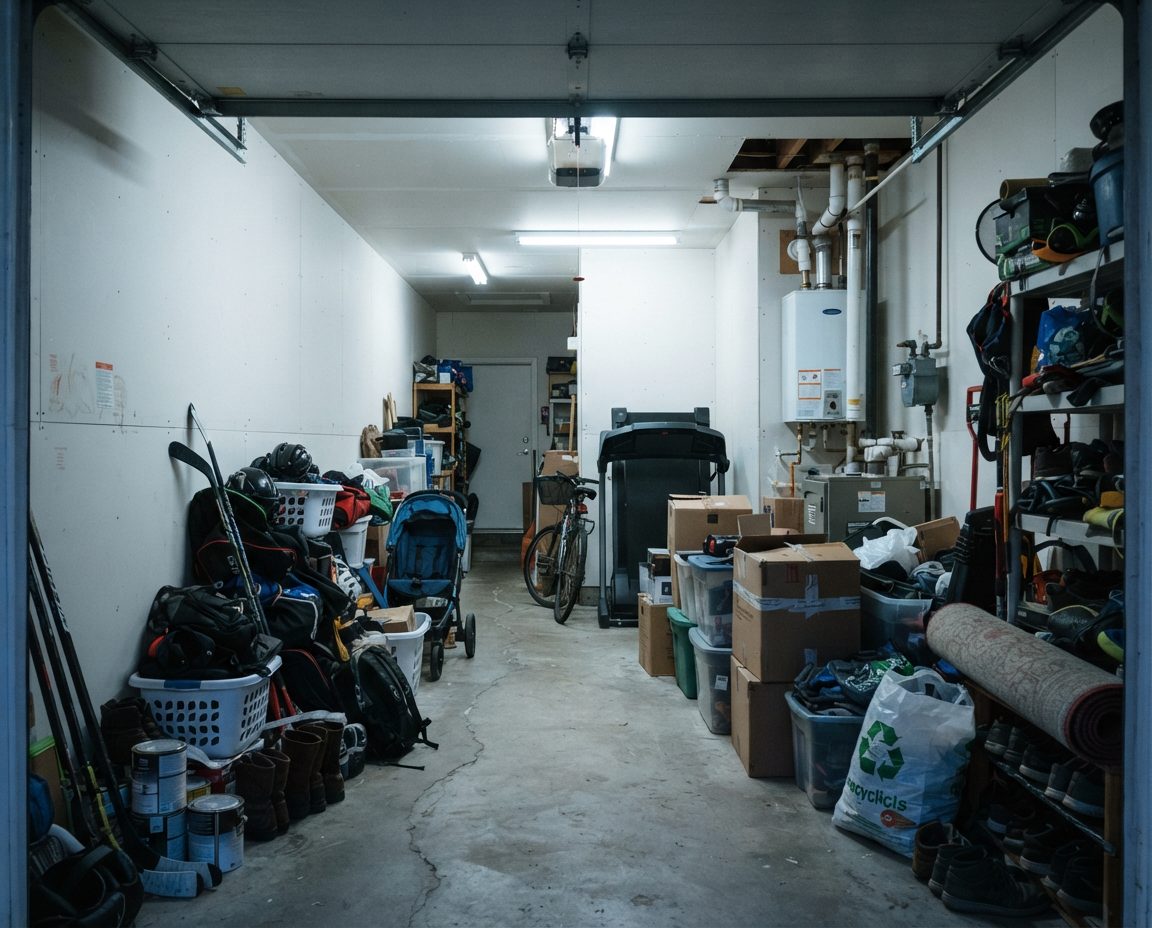
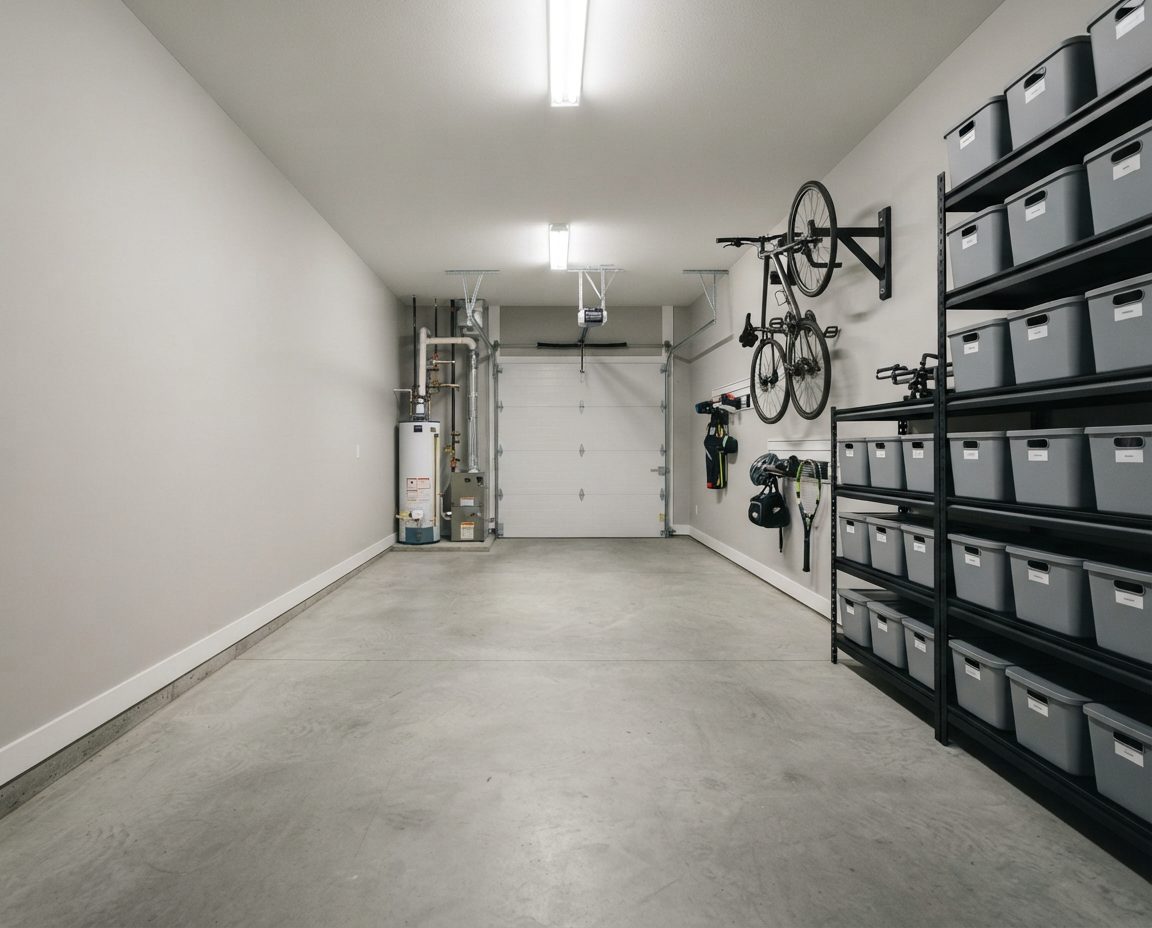
Narrow garages work from the side wallsAn example tandem layout, not a West Vancouver client's garage. Shallow shelving and wall-hung bikes keep the full length open for a car.
We start with a free on-site visit, walk the garage with you, agree what each bay or wall is for, and send a written plan with a fixed price. On the day we pull everything out onto the driveway, sort it into keep, donate, recycle and dispose, clean the empty floor, then build back in: cart station and freezer first, then daily gear, then the ski, bike and paddle wall, then seasonal storage and the workshop. Donations and disposal leave with us. A double garage is usually one day; a three or four bay garage is usually two.
Shelving, bins, rails and hoists are quoted separately at cost, and we are happy to reuse what you already own. For new hardware chosen for a coastal garage, see our garage storage solutions in Vancouver. Before anything heavy goes on a wall, our earthquake-ready garage storage guide explains why we fix shelving to studs and keep heavy items low.
Service pricing below. Garages with three or more bays are quoted after the site visit. Shelving, bins, rails and hoists are quoted separately at cost.
We organize garages across West Vancouver: Park Royal, Ambleside, Dundarave, West Bay, Altamont, Sentinel Hill, the British Properties, Chartwell, Westmount, Cypress Park, Bayridge, Caulfeild and Upper Caulfeild, Eagle Harbour, Gleneagles, Whytecliff and Horseshoe Bay, and up the Sea-to-Sky to Lions Bay. Across the Capilano River we work in North Vancouver, and across the region from Vancouver to Burnaby. Every city we serve is listed on our Metro Vancouver services page. GarageScape started in Alberta, where the garage storage we build in Calgary deals with frost and road salt, and our garage decluttering in Calgary is still where most of our Alberta work begins.
Yes. We work from Park Royal and Ambleside through Dundarave, the British Properties, Chartwell, Cypress Park, Caulfeild, Eagle Harbour and Horseshoe Bay, and up the Sea-to-Sky to Lions Bay.
Each bay gets one job. Usually the bay nearest the house door holds the daily car, the landing zone and the cart station; the middle bay holds the second car with the bikes and gear wall beside it; and the far bay becomes the workshop, the seasonal store or the place for a boat, trailer or project car. Every bin is labelled by bay so things come back to the same place.
The District of West Vancouver asks residents to keep garbage and the Green Can in a garage, basement or other wildlife-secure place during the week, set them out after 5 a.m. on collection day and bring them back in by 9 p.m. We give the carts a marked spot inside the garage door with room for the lids to open and a freezer nearby for meat and fish scraps.
Off the floor and with air around them. Skis and boards stand in a wall rack with boots and helmets on an open shelf beside it, bikes hang from a rail by the wheel, and paddleboards and kayaks go on padded cradles or a ceiling hoist that we measure against the opening garage door.
The North Shore is the wettest part of Metro Vancouver, and garages dug into a slope stay cool and damp. Cardboard absorbs that moisture. We move stored items into lidded plastic bins on shelving raised off the slab and set slightly away from the outside walls so air can move behind it.
Organization starts at $549 for a single or tandem garage, $899 for a standard double, and $1,800 for a full transformation that bundles decluttering, a deep clean and the organization build. Garages with three or more bays are quoted after the site visit. Shelving, bins, rails and hoists are quoted separately at cost.
Free on-site visit. We walk the garage with you, plan what each bay and wall holds, and give you a written plan and fixed price before we start.
Serving West Vancouver, Lions Bay, North Vancouver and the rest of Metro Vancouver.